

Can Breathwork Help With Anxiety and Overthinking?
Anxiety and overthinking can make it feel like the mind is running faster than the body can keep up. Thoughts loop. The chest tightens. The breath becomes shallow. Even when nothing urgent is happening, the nervous system may feel alert, restless, or unable to settle.
For many people, this is one reason breathwork feels interesting. The breath is always happening in the present moment, and anxiety often pulls attention into imagined futures, unfinished conversations, or worst-case scenarios. Breathwork can offer a way to come back into the body with more awareness.
Breathwork is not a cure for anxiety, and it is not a replacement for therapy, medical care, or mental health support. But when practiced safely and with guidance, breathwork may help some people notice their breathing patterns, soften physical tension, and create more space between themselves and their thoughts.
This article explores how breathwork may support anxiety and overthinking, why the nervous system matters, and how to begin with care.
Why Anxiety Affects the Breath
The breath and nervous system are closely connected. When a person feels anxious, stressed, or under pressure, breathing may become faster, higher in the chest, or more restricted. Some people hold their breath without realizing it. Others breathe just enough to get by, but not enough to feel grounded.
This can create a feedback loop. The mind feels anxious, the breath changes, the body receives the signal that something may be wrong, and the mind becomes even more alert. Overthinking often grows inside that loop.
Breathwork helps bring awareness to this pattern. Instead of trying to argue with every thought, the practice invites you to notice what is happening in the body and begin there.
Can Breathwork Help With Anxiety?
Breathwork may help some people with anxiety by supporting body awareness, present-moment attention, and nervous system regulation. For certain people, intentional breathing can create a sense of calm, grounding, and connection. For others, it may reveal emotions or sensations that need care and support.
The key is to approach breathwork gently. If you are already feeling anxious, forcing a deep or intense breathing pattern may not be helpful. The safest place to begin is often with simple awareness, slower pacing, and guidance from someone who understands how to hold space.
At Breathe Your Way Home, breathwork is not framed as a quick fix. It is a practice of listening. The breath becomes a way to notice where the body is holding tension, where the mind is gripping, and where there may be space to soften.
Breathwork and Overthinking
Overthinking often lives in the head, but it is usually felt in the body too. You may notice a tight jaw, tense shoulders, a heavy chest, a nervous stomach, or the sense that you cannot fully exhale.
Breathwork can help interrupt the habit of only solving things mentally. Instead of continuing to analyze, the practice gives the body a role in the process. Breathing with awareness can help shift attention away from looping thoughts and into sensation, rhythm, and presence.
This does not mean thoughts disappear immediately. It means you are practicing a different relationship with them. You can notice the thought without becoming the thought. You can feel the body without needing to solve everything at once.
What Kind of Breathwork Is Best for Anxiety?
The best breathwork for anxiety depends on the person. Some people benefit from slow, grounding breath awareness. Others may feel supported by deeper guided breathwork when they are in a safe space with a facilitator.
If you are new to breathwork or prone to panic, it is wise to start gently. Focus on comfort, grounding, and choice. You do not need to push into intensity. You can keep your eyes open, breathe through your nose, slow down, or pause at any point.
A guided breathwork session in Miami can be helpful because you do not have to navigate the experience alone. A facilitator can explain what to expect, offer modifications, and help you stay connected to your body if sensations arise.
How Breathwork May Support the Nervous System
The nervous system responds to signals of safety and threat. Breath is one of the signals the body listens to. When breathing is rushed, shallow, or held, the body may remain in a more alert state. When breathing becomes more conscious, some people experience a shift toward steadiness and presence.
Breathwork may support the nervous system by helping you notice your state, release physical tension, and return attention to the present. It may also create space for emotion to move rather than stay locked in the body.
We explore this more in our article on breathwork for stress and nervous system support. Anxiety and stress are not the same experience, but they often overlap in the body.
When Breathwork Might Feel Too Intense
Breathwork is not always calming in the moment. Some people feel emotion, tingling, warmth, lightheadedness, or vulnerability. If you already feel anxious, those sensations can sometimes feel unfamiliar or uncomfortable.
This is why pacing matters. If breathwork starts to feel overwhelming, you can slow down, return to a natural breath, open your eyes, place a hand on your body, or stop. You do not need to force yourself through anything.
If you have a history of panic attacks, trauma, dissociation, psychiatric hospitalization, or significant mental health concerns, speak with a qualified professional before beginning deeper breathwork. You may also want to start in a private setting with extra support. Our guide on breathwork safety for beginners covers this more fully.
How to Begin Breathwork for Anxiety Gently
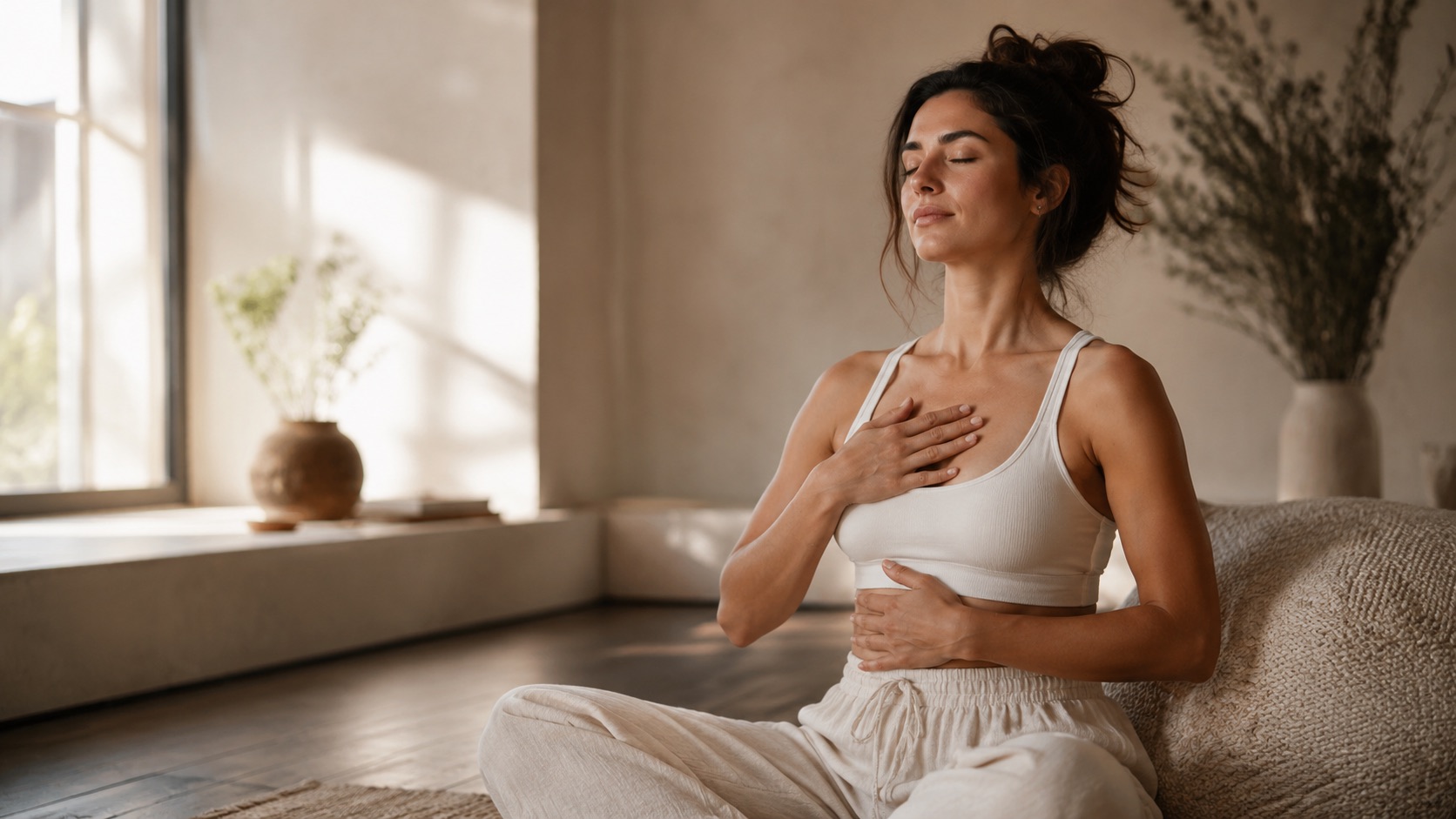
If you are curious about breathwork for anxiety, begin with simplicity. You might sit or lie down, place one hand on your chest and one hand on your belly, and notice your breath without changing it. Then, if it feels comfortable, allow the exhale to become slightly longer.
You can also ask yourself: Where do I feel anxiety in my body? What happens if I soften my jaw? Can I feel the ground underneath me? Can I let this breath be enough?
These small practices may seem simple, but they help build trust with the body. Deeper breathwork can come later, when you feel ready and supported.
Private Breathwork for Anxiety and Overthinking
A private breathwork session can be especially supportive if anxiety feels personal, layered, or difficult to explain. In a private setting, you can share what is happening, ask questions, discuss safety considerations, and move at a pace that feels right for your nervous system.
Some people come to private breathwork because they are tired of living only in their thoughts. Others come because they want to feel more connected, more grounded, or more emotionally present. The session does not need to be dramatic to be meaningful. Sometimes the most powerful shift is simply feeling safe enough to breathe.
If you are comparing options, read how to choose the right breathwork session in Miami.
FAQ: Breathwork for Anxiety and Overthinking
Can breathwork cure anxiety?
No. Breathwork should not be described as a cure for anxiety. It may support body awareness, stress regulation, and grounding for some people, but it is not a replacement for therapy, medical care, medication, or professional mental health support.
Is breathwork good for overthinking?
Breathwork may help some people step out of repetitive thinking by bringing attention back to the body, breath, and present moment. It does not eliminate thoughts, but it can support a different relationship with them.
Can breathwork make anxiety worse?
For some people, especially those prone to panic or trauma responses, certain breathing techniques may feel too intense. That is why it is important to start gently, work with a supportive facilitator, and stop or slow down if the practice feels overwhelming.
Should I do breathwork alone if I have anxiety?
Simple breath awareness may be fine for many people, but deeper breathwork is often best practiced with guidance, especially if you have anxiety, panic, trauma history, or medical concerns. A private guided session can provide more support and choice.
Coming Back to Yourself Through the Breath
Anxiety and overthinking can make you feel far away from yourself. Breathwork offers a way back into the body, one breath at a time.
The practice does not ask you to force calm. It invites you to notice. To listen. To soften where you can. To remember that your body is not just carrying stress; it can also become part of your support.
If you are curious about guided breathwork for anxiety, overthinking, or nervous system support, you can explore breathwork offerings, learn more about Kanan, or contact Breathe Your Way Home to ask about a private session in Miami or online.